Growing Tropicals in New Orleans
Written by Kelsie Guzik
New Orleans is often called the ‘northernmost Caribbean city’ for its distinct Creole culture (Kemp, 1997). Because of climate changes, its subtropical climate increasingly resembles tropical conditions—over 70% of residents now live on urban heat islands, where some neighborhoods reach up to 18 degrees warmer than others on summer afternoons (Parker, 2023). Across Louisiana, growers are adapting to these hotter conditions by experimenting with tropical species. This summer, we began testing tropical plants ourselves to see which might provide resilient, locally grown cut flowers and foliage for our bouquets.
Acquiring the plants:
Over a year ago, our WWOOFer, Eva, began researching which tropical species could withstand New Orleans’ weather. This past August, during our farm’s late-summer downtime, Megan took a road trip through Florida to pick up several of these plants.
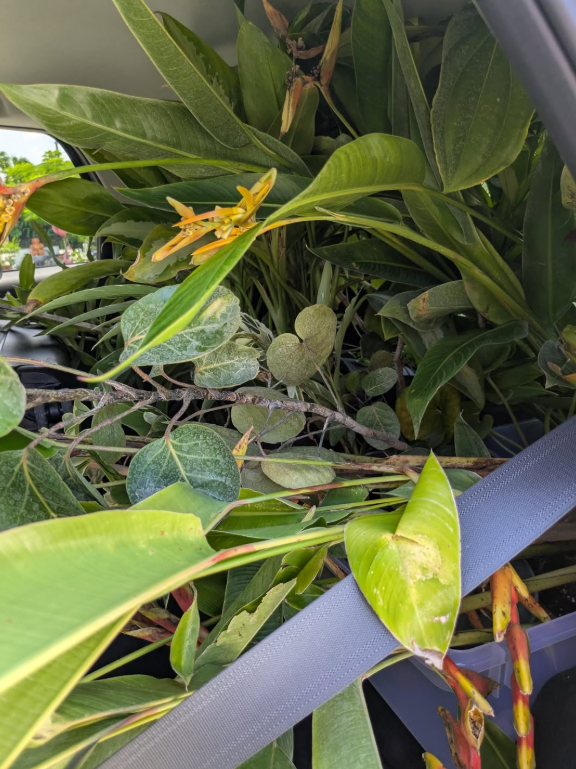
Tropical plants buckled up for their road trip from Florida to New Orleans.
Also, did you know that Etsy is not only for custom home decor and knitting patterns? It also has a thriving tropical plant scene! We ordered species we couldn’t find locally and spent September receiving box after box of carefully packaged starts and rhizomes in the mail.
Soil:
Next, we potted our tropicals in store-bought potting soil. This seemed to work for some species—our aglaonemas, anthuriums, and strelitzias are looking good as of December—but our reading indicates that many tropical plants prefer mixes with better drainage, more aeration, and higher organic matter. Soon, we’ll repot all of our plants into larger containers using a blend of Shmelly’s soil and organic fertilizers.
Water:
We’ve noticed our tropicals thrive on rainwater rather than city water. This fall has been dry, so we’ve been handwatering them from our cistern—a converted food-grade IBC tote—to avoid using tap water, which can contain chlorine, lead, and other compounds. Tropical plants don’t seem to like soggy roots so we’ve been making sure to water only when the soil is dry.
Sun:
We placed all of our tropical plants on the back deck and created partial shade using two custom pieces of shade cloth that Kelsie sewed—one hanging from above, and one vertically in front of the plants. To prevent the tearing we’ve previously experienced with cut cloth around grommets, Kelsie reinforced the edges of each shade cloth with triple-folded hems and set the grommets inside them. Jamming up her machine with thick layers of polyethylene was worth it! The cloths have held up with no rips over the past three months. However, we’ve noticed sun damage on some of our plants, like the Heliconia rostrata and Diffenbachia. Going forward, we may adjust the cloths to create more shade on the deck or move these plants elsewhere.
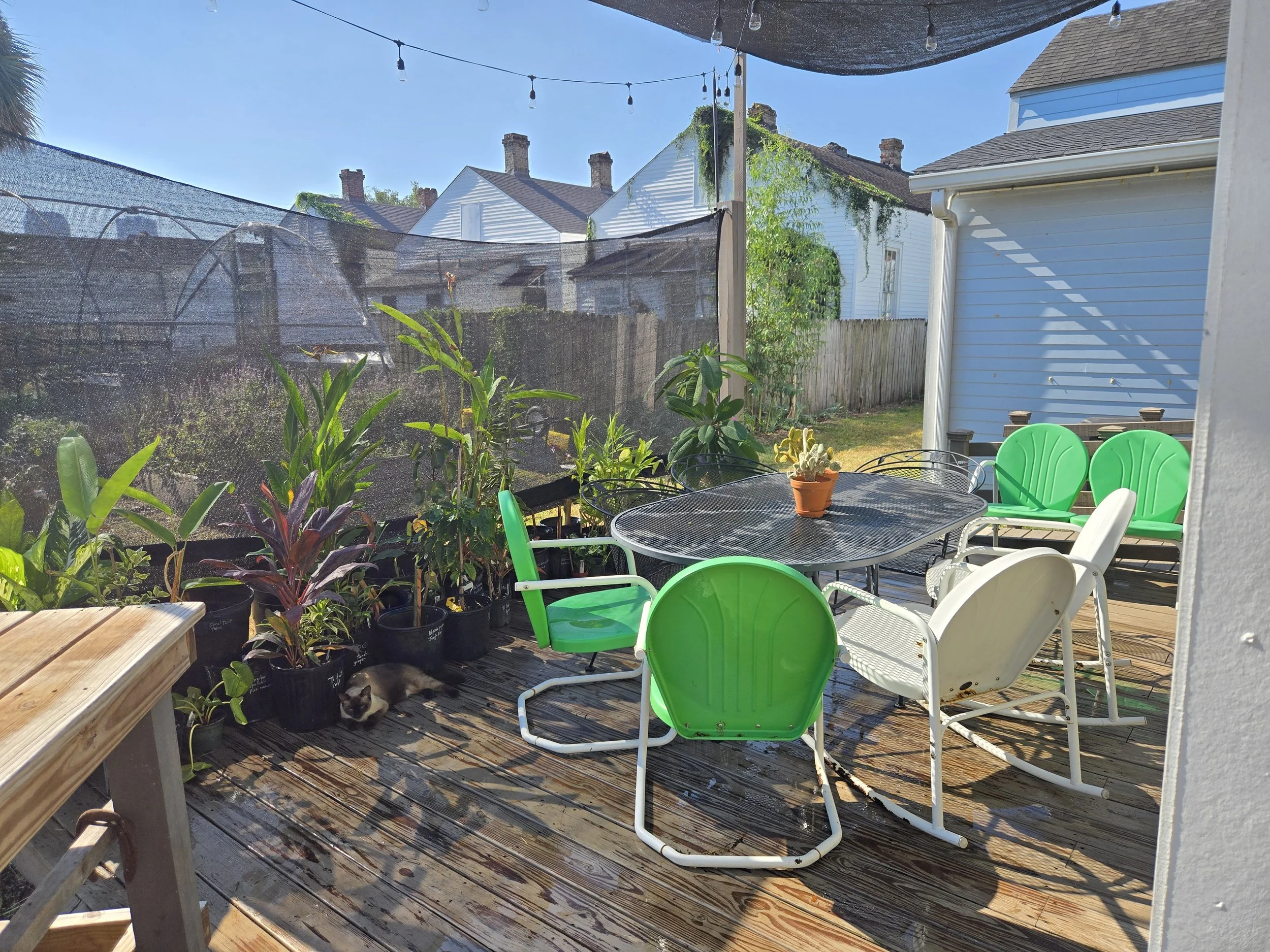
Beautifully hemmed shade cloths providing partial shade for the tropical plants (and Yumi the cat).
Vase life:
In October, we conducted a vase life test to see how long cut flowers and foliage from our tropicals would stay fresh and visually appealing after harvest. At Baby T-Rex Farms, we consider stems viable as cut flowers if they last at least five days in a vase. Fortunately, all the species we tested exceeded this, lasting over a week. We’ll continue vase testing the rest of our tropical plants and look forward to creating beautiful, long-lasting bouquets!
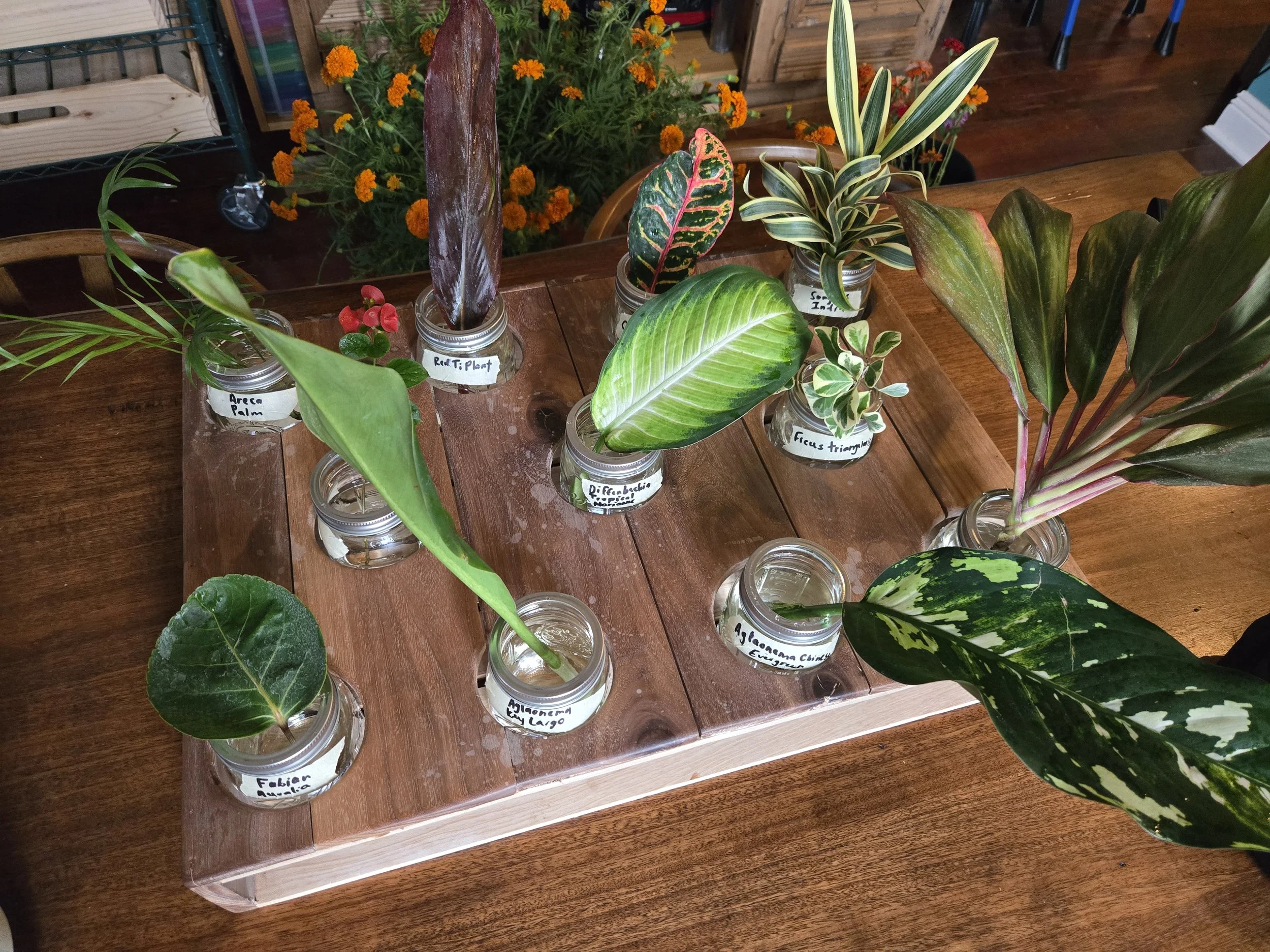
Vase testing foliage in mason jars. Can you imagine how striking these tropical leaves will look in our bouquets?
We’ve included a comprehensive list here of all the tropical plant species we’ve been testing. Huge thanks to Sprout for the grant funding that has made this all possible! Follow along as we’ll post updates on this on Instagram: @babyt_rexfarms and contact us if you have any questions.